
Ever notice how much food waste ends up in your trash? As a nutritionist and meal prep coach, I’m passionate about healthy eating, but even the healthiest kitchens generate scraps. Luckily, composting offers a simple, eco-friendly solution. Choosing the right kitchen compost bin can transform your kitchen waste into valuable garden gold, reduce your environmental footprint, and even save you money. This guide explores the best kitchen compost bins available, helping you choose the perfect one for easy waste management and eco-conscious living.
Why Compost? The Benefits of Kitchen Composting
Composting is more than just tossing your apple cores into a bucket. It’s a natural process that transforms organic waste into nutrient-rich compost, a fantastic soil amendment for your garden or houseplants. Here are a few reasons why composting is a game-changer:
Environmental Advantages
- Reduces Landfill Waste: Food waste in landfills produces methane, a potent greenhouse gas. Composting significantly reduces this harmful emission.
- Enriches Soil: Compost improves soil structure, water retention, and nutrient content, leading to healthier plants and reduced need for chemical fertilizers.
- Conserves Resources: By returning nutrients to the soil, composting reduces the need for resource-intensive fertilizers and minimizes the strain on natural resources.
Personal Benefits
- Free Fertilizer: Compost is a free and natural fertilizer, saving you money on gardening supplies.
- Reduces Garbage Odor: A well-maintained compost bin can actually reduce kitchen odors by containing food scraps in a controlled environment.
- Connects You with Nature: Composting brings you closer to the natural cycle of growth and decay, fostering a deeper appreciation for the environment. “The ultimate goal of farming is not the growing of crops, but the cultivation and perfection of human beings,” as Masanobu Fukuoka, the author of “The One-Straw Revolution,” wisely observed.
Choosing the Right Compost Bin: Factors to Consider
The perfect compost bin fits your lifestyle and kitchen space. Consider these factors:
Size and Capacity
- Small households: A countertop compost bin or a small under-sink option may suffice.
- Larger families or avid gardeners: A larger capacity bin, possibly a freestanding unit, might be more suitable.
Material
- Stainless Steel: Durable, odor-resistant, and aesthetically pleasing, but can be more expensive.
- Plastic: Affordable and lightweight, but may absorb odors over time.
- Ceramic: Stylish and odor-resistant, but can be fragile.
Features
- Odor Control: Features like charcoal filters or airtight lids help minimize unpleasant smells.
- Ease of Cleaning: Choose a bin that’s easy to empty and clean to maintain hygiene.
- Aesthetics: Consider how the bin will look in your kitchen.
Top Kitchen Compost Bin Recommendations
Based on research and user reviews, here are some of the best kitchen compost bins available:
Countertop Compost Bins
- Option 1: A sleek stainless steel compost bin with a charcoal filter for odor control. Ideal for small kitchens.
- Option 2: A compact ceramic compost bin with a replaceable filter. Stylish and functional.
Under-Sink Compost Bins
- Option 1: A pull-out compost bin that fits under the sink, maximizing space utilization.
- Option 2: A hanging compost bin that attaches to a cabinet door. Convenient and accessible.
Freestanding Compost Bins
- Option 1: A larger capacity compost bin suitable for outdoor use or larger families. Durable and weather-resistant.
Tips for Successful Kitchen Composting
- Balance Your Compost: Mix “greens” (nitrogen-rich materials like food scraps) with “browns” (carbon-rich materials like dry leaves or shredded paper).
- Keep it Moist: A slightly damp compost pile promotes decomposition.
- Turn Regularly: Turning your compost helps aerate it and speeds up the composting process.
- Troubleshooting: If your compost smells bad, it’s likely too wet or lacks enough “browns.”
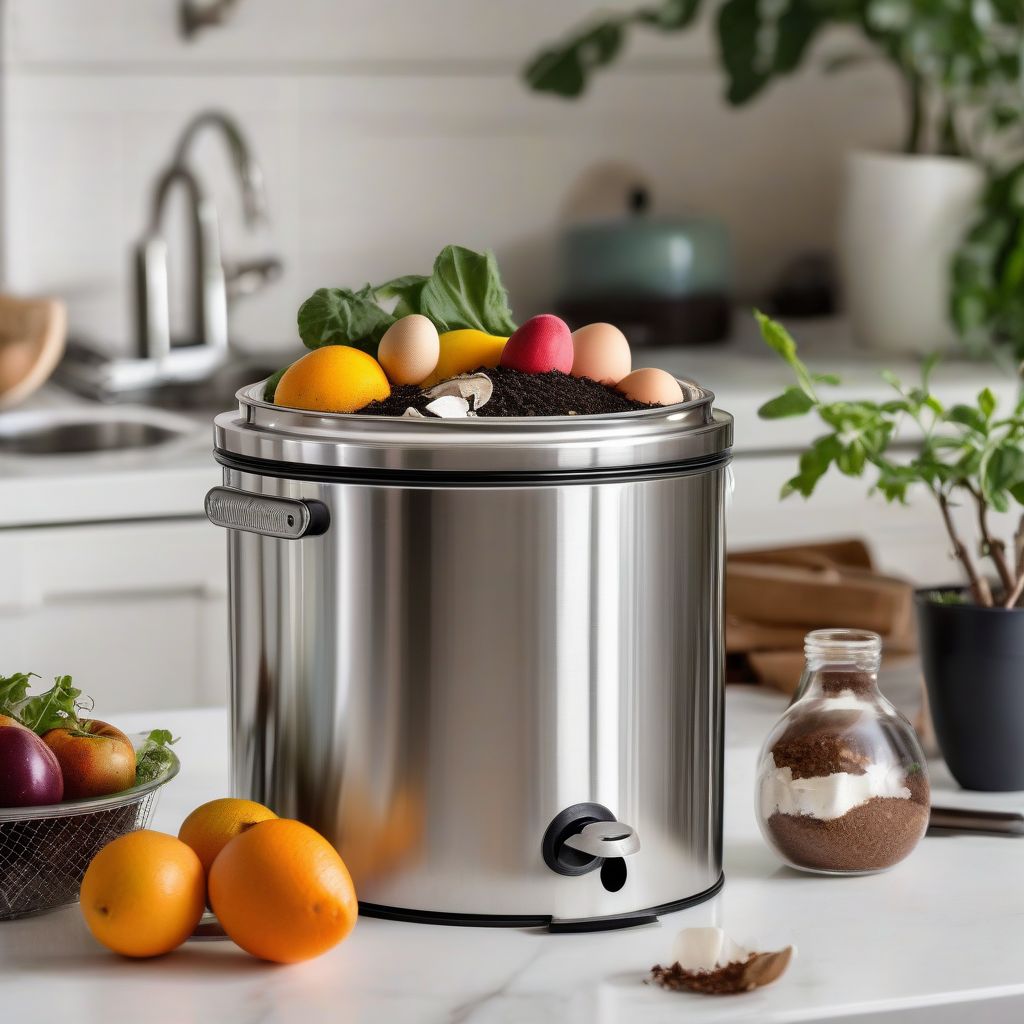 Best Kitchen Compost Bins
No products found.
Composting Common Kitchen Waste
Most fruit and vegetable scraps, coffee grounds, tea bags, and eggshells can be composted. Avoid composting meat, dairy, or oily foods, as these can attract pests and create unpleasant odors.
Kitchen Composting for Beginners: Getting Started
Start small and choose a composting method that fits your lifestyle. Don’t be afraid to experiment and learn as you go. Composting is a journey, and even small steps can make a big difference. “Don’t judge each day by the harvest you reap but by the seeds that you plant,” as Robert Louis Stevenson said.
Conclusion
Choosing the right kitchen compost bin is the first step towards a more sustainable kitchen and a healthier planet. By reducing waste, enriching your soil, and connecting with nature, you contribute to a greener future. Explore the options, find the perfect bin for your needs, and start composting today! What are your thoughts on kitchen composting? Share your experiences and tips in the comments below!
