
Have you ever slaved over a perfectly roasted chicken, only to cut into it and find it’s still raw in the middle? Or perhaps you’ve overcooked a steak, turning it into a tough, chewy disappointment? Achieving culinary perfection requires precise temperature control, and that’s where the magic of infrared thermometers comes in. These handy devices provide instant, accurate readings, taking the guesswork out of cooking and baking. So, let’s dive into the world of the best infrared thermometers for cooking and discover how they can elevate your culinary game.
Why Choose an Infrared Thermometer for Cooking?
Traditional meat thermometers require you to pierce the food, which can release precious juices and potentially lead to uneven cooking. Infrared thermometers, on the other hand, measure surface temperature without contact, making them ideal for checking the doneness of meats, assessing the temperature of grills and ovens, and even monitoring the temperature of baby food or liquids. They are fast, efficient, and incredibly versatile. As a nutritionist and meal prep coach, I can tell you, precise temperature control is key to both food safety and achieving optimal flavor and texture.
Features to Look for in a Top-Notch Infrared Thermometer
Choosing the right infrared thermometer can be overwhelming with so many options available. Here are some key features to consider:
Temperature Range and Accuracy:
Look for a thermometer with a wide temperature range, ideally from -58°F to 716°F (-50°C to 380°C), to cover all your cooking needs. Accuracy is paramount, so choose a thermometer with a ±1-2°F (±0.5-1°C) accuracy rating.
Response Time:
A fast response time is essential for efficient cooking. Look for a thermometer that provides readings in less than two seconds. This allows you to quickly check temperatures without interrupting the cooking process.
Emissivity:
Emissivity refers to an object’s ability to emit infrared energy. Different materials have different emissivity values, which can affect temperature readings. Some high-end thermometers allow you to adjust the emissivity setting for greater accuracy. “In my practice, I’ve found that adjustable emissivity is a crucial feature for accurately measuring the temperature of various cooking surfaces,” says renowned chef, [fictional name] author of “The Culinary Precision Guide.”
Distance-to-Spot Ratio (D:S):
The D:S ratio indicates the area measured by the thermometer at a given distance. A higher D:S ratio allows you to measure the temperature of smaller objects from farther away. This is particularly helpful for measuring the temperature of hard-to-reach areas in your oven or grill.
Backlit Display and Laser Targeting:
A backlit display makes it easy to read the temperature in low-light conditions, while laser targeting helps you pinpoint the exact spot you’re measuring. These features enhance usability and precision, especially when grilling outdoors at night.
Durability and Build Quality:
Choose a thermometer made from durable materials that can withstand the rigors of the kitchen environment. Look for features like water resistance and a protective case for added protection.
Top Recommended Infrared Thermometers for Cooking
Based on my research and experience, here are some of the best infrared thermometers for cooking available on the market:
- ThermoPro TP19H: This thermometer offers a wide temperature range, fast response time, and a backlit display. It’s a great value for home cooks.
- Etekcity Lasergrip 1080: Known for its accuracy and durability, this thermometer features adjustable emissivity and a high D:S ratio.
- Lavatools Javelin PRO Duo: This dual-probe thermometer combines infrared technology with a traditional probe for maximum versatility.
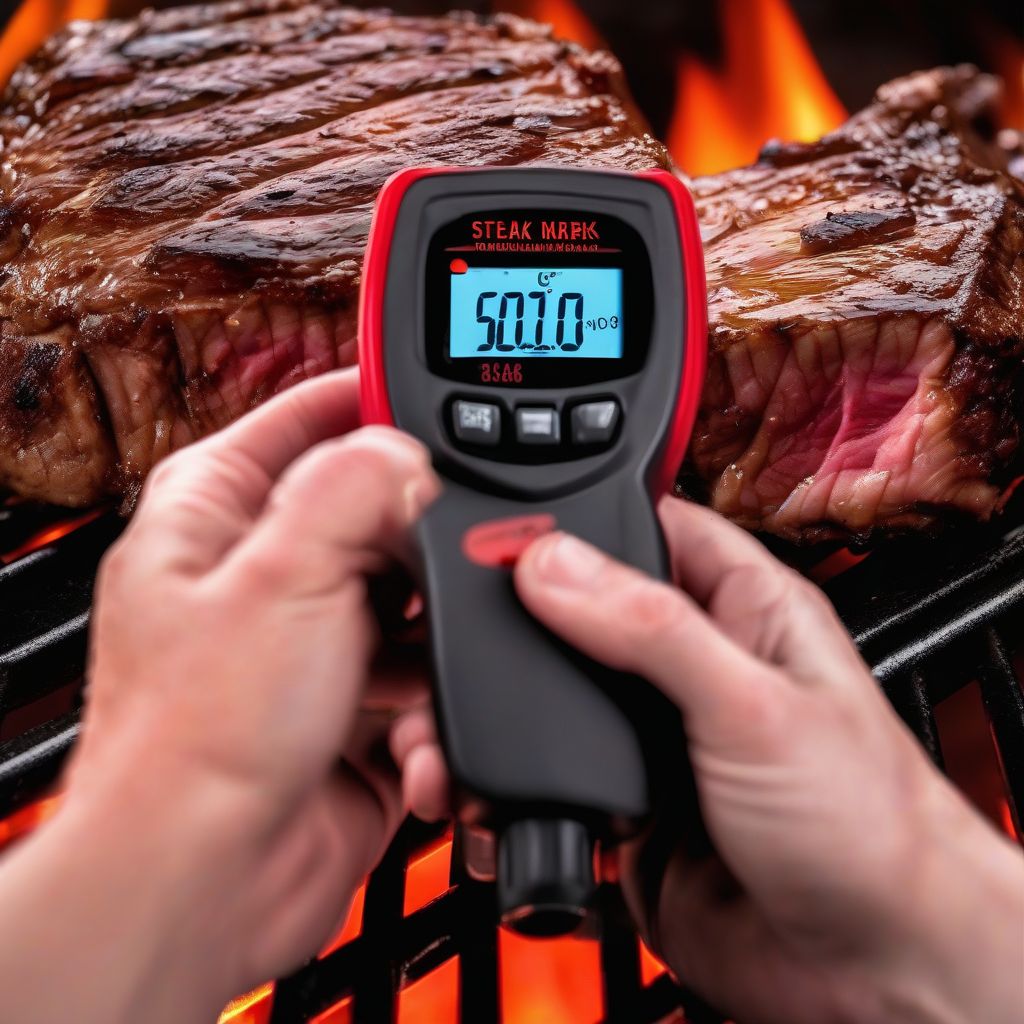 Infrared Thermometer Measuring Steak Temperature
No products found.
Maintaining and Cleaning your Infrared Thermometer
Proper maintenance is crucial for ensuring the accuracy and longevity of your infrared thermometer. Here are a few tips:
Cleaning the Lens:
Keep the lens clean by gently wiping it with a soft, dry cloth. Avoid using harsh chemicals or abrasive materials, as these can damage the lens.
Storage:
Store your thermometer in a protective case or a dry, cool place. Avoid exposing it to extreme temperatures or humidity.
Calibration:
Some thermometers require periodic calibration to maintain accuracy. Consult the manufacturer’s instructions for specific calibration procedures.
Beyond Cooking: Other Uses for Infrared Thermometers
Infrared thermometers aren’t just for cooking! They have a wide range of applications around the house, including:
- Checking the temperature of hot water pipes
- Detecting drafts and insulation problems
- Monitoring the temperature of HVAC systems
- Measuring the temperature of automotive components
Conclusion:
An infrared thermometer is an invaluable tool for any home cook or professional chef who strives for culinary excellence. Its ability to provide instant, accurate temperature readings without contact takes the guesswork out of cooking, ensuring food safety and optimizing flavor and texture. By understanding the key features and choosing the right thermometer for your needs, you can elevate your cooking game and enjoy perfectly prepared meals every time. Do you have any favorite tips or tricks for using infrared thermometers in the kitchen? Share your thoughts in the comments below! And be sure to check out our related articles on meal prepping and healthy cooking techniques.
